Brake Upgrades That Actually Matter for Street Cars
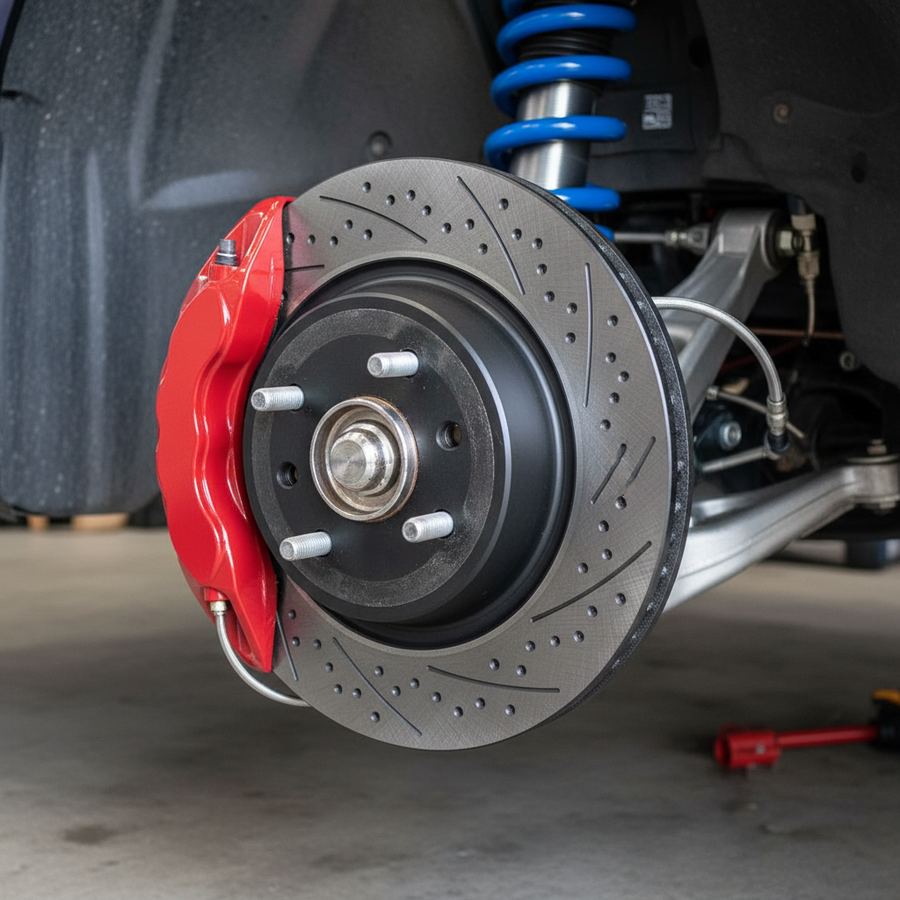
The brake upgrade conversation in the car community is dominated by big brake kits, slotted rotors, and red calipers. Most of it is backwards. The upgrades that actually improve your stopping distance and pedal feel cost a fraction of what a big brake kit costs, and they work on the parts of the system that are actually limiting your braking performance. Here is what matters, what does not, and why.
Good Pads Are the Biggest Single Improvement
If you are running the cheapest pads the auto parts store had on the shelf, upgrading to a quality performance pad will transform your braking. The pad compound determines the friction coefficient, and friction is what actually stops the car. A better compound gives you more initial bite, better modulation, and significantly improved fade resistance under hard use.
For most street-driven modified cars, a good semi-metallic or carbon-ceramic pad is the single most cost-effective braking upgrade. We are talking $60 to $150 per axle for a meaningful improvement in stopping power. No other brake modification gives you this much return per dollar.
Stock pads are engineered for low noise, low dust, long life, and adequate stopping power. "Adequate" is the key word. Stepping up to a performance compound shifts that balance toward friction and fade resistance, which is what you want on a car that goes faster than stock.
Fresh Brake Fluid: Cheap and Critical
Brake fluid is hygroscopic. It absorbs moisture through rubber hoses and seals over time. As water content increases, the boiling point drops. When brake fluid boils, it creates gas bubbles in the lines, and gas compresses where liquid does not. The result is a spongy pedal that goes to the floor when you need it most.
Fluid that has been in the system for three or four years has likely absorbed enough moisture to drop its boiling point by 50 to 100 degrees Fahrenheit. On a car driven hard, that is the difference between solid pedal feel and a pedal that fades on a mountain descent. A complete brake fluid flush costs $80 to $150 at a shop, or about $20 in fluid if you do it yourself. For a modified street car, do it once a year.
For street use, DOT 4 fluid from a reputable brand (Motul RBF 600, ATE Super Blue, or Castrol SRF) is all you need. DOT 5 (silicone-based) is not compatible with most braking systems and should be avoided.
Stainless Steel Brake Lines: Better Pedal Feel
Stock brake lines are rubber. Under high hydraulic pressure, rubber expands slightly, absorbing some of the force before it reaches the caliper pistons. The pedal feels softer and less precise than it should.
Stainless steel braided lines have a Teflon inner core that does not expand under pressure. The result is a firmer, more direct pedal feel with better modulation. For data-driven drivers who want precise brake control, this is a noticeable improvement. A set costs $80 to $200 and takes about an hour to install followed by a full fluid bleed.
On older cars with aging rubber lines, this upgrade doubles as a safety improvement. Old rubber lines can swell internally and restrict flow, or develop cracks that lead to leaks. If your lines are more than 10 years old, replacing them with stainless is maintenance and upgrade in one step.
Rotors: Upgrade Thoughtfully, Not Aggressively
Rotors are heat sinks. Their job is to absorb the thermal energy generated by the pads and dissipate it into the air. Bigger rotors absorb more heat. Vented rotors (with internal cooling vanes) dissipate heat faster than solid rotors. Beyond that, most rotor marketing is noise.
Slotted rotors have grooves cut into the friction surface that sweep away gas and debris, improving initial bite and reducing glazing. They do wear pads slightly faster, but the tradeoff is worth it on a car that gets driven hard.
Cross-drilled rotors look aggressive but are structurally weaker. The holes act as stress risers, and on cars that see hard braking, drilled rotors can crack between them. Slots are the more durable option for performance use. If you want the look of drilled rotors, that is a cosmetic preference, not a performance one.
For most modified street cars, a quality blank or slotted rotor from Centric, StopTech, or DBA is the right choice. Metallurgy matters for heat management and longevity, and you get what you pay for in rotor quality.
Big Brake Kits: Usually Unnecessary
Here is where the conversation gets controversial. Big brake kits (BBKs) with larger rotors and multi-piston calipers are the most visible brake upgrade. They look incredible behind open-spoke wheels. They also cost $1,500 to $4,000 or more, and on most street cars, they do not improve stopping distance.
The maximum braking force on any car is limited by tire grip, not brake capacity. Your stock brakes can already lock the wheels or activate ABS. The tires are the limiting factor. Making the brakes more powerful does not help when the tires are already at their limit.
Where BBKs help is thermal capacity. Bigger rotors absorb more heat before they fade. On a car that sees repeated hard braking from track days or mountain roads, the increased thermal mass matters. On a street car that occasionally gets driven hard? Stock brakes with good pads, fresh fluid, and stainless lines handle anything the street throws at them. A BBK on a car that never exceeds its stock thermal limits is $2,000 for looks.
Tires Matter More Than Brake Size
This is the most important point in this article. Your tires are the single biggest factor in how quickly your car stops. Not your calipers. Not your rotors. Not your pads. Your tires.
The friction between rubber and road determines maximum deceleration. Every brake component exists to bring the tire to the edge of its grip limit. Once the tire is at its limit, more brake force just means ABS activation or lockup.
A car on cheap all-season tires with a $3,000 big brake kit will stop slower than the same car on quality UHP summer tires with stock brakes. That is physics. The contact patch and compound determine grip, and grip determines stopping distance.
If you are running mediocre tires, spend the brake upgrade money on better tires first. You get a bigger improvement in stopping distance, plus better turn-in, more cornering grip, and improved traction. Tires improve everything. Bigger brakes only improve brakes.
The Right Order of Upgrades
If you want to improve the braking on your modified street car, here is the order that makes the most sense from a cost-versus-benefit standpoint:
- Tires. The foundation of all grip. Nothing else matters if the rubber is not there.
- Pads. The biggest bang for the buck in the braking system itself. A quality compound transforms pedal feel and fade resistance.
- Fluid. Fresh, high-quality fluid prevents fade and keeps the pedal firm. Cheap and effective.
- Stainless lines. Better pedal feel and modulation. Also a safety upgrade on older cars.
- Rotors. Slotted rotors from a quality manufacturer if you want improved bite and heat management.
- Big brake kit. Only if you have genuinely exceeded the thermal capacity of the stock system, which means repeated hard braking from high speed, not just spirited street driving.
Most street cars will never need to go past step four or five. The first three steps together cost less than $500 and will make your brakes feel like a completely different system. Spend the big money only when the cheaper upgrades are no longer enough, and you will get far more value out of every dollar spent on your build.