Performance Brake Pads for Street Cars: What Actually Works Daily
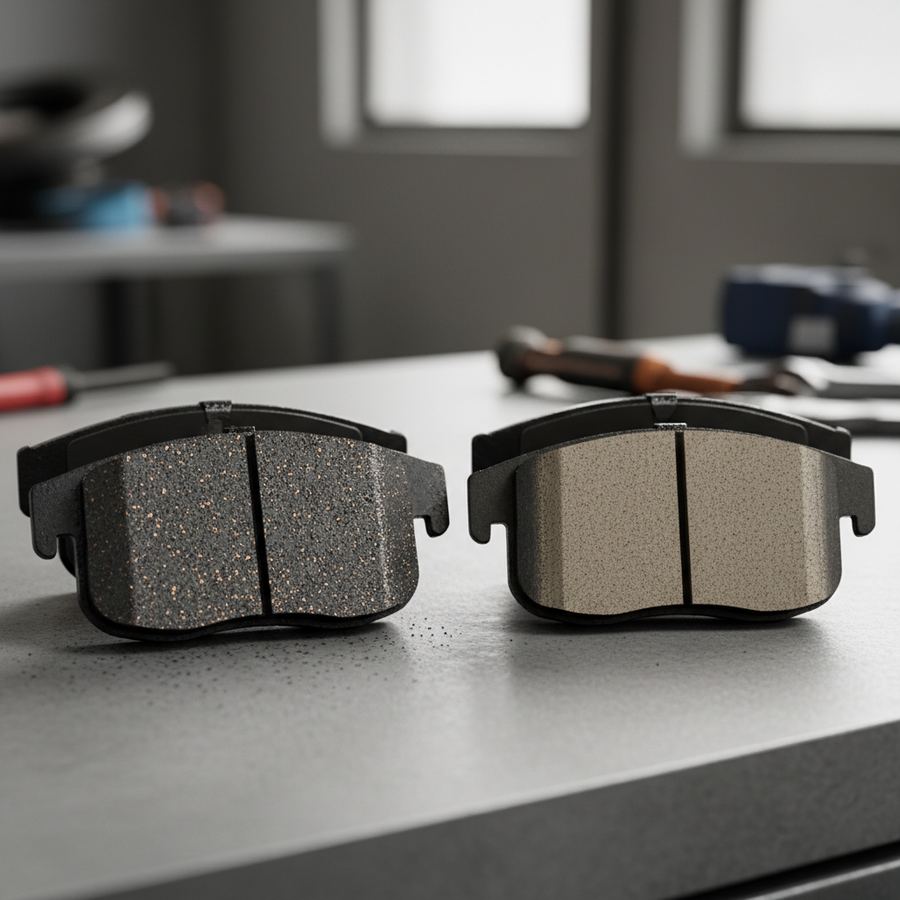
Brake pads are the cheapest and most effective braking upgrade on a modified street car. They are also the easiest to get wrong. The compound you choose determines how your brakes feel, how much dust they produce, how much noise they make, and whether they fade when you need them. Getting this right requires ignoring marketing and understanding what these materials actually do.
How Brake Pad Compounds Work
A brake pad is friction material bonded to a steel backing plate. The compound determines friction at different temperatures, how much material transfers to the rotor surface, and how the pad wears over time.
Every compound has a temperature range where it works best. Below that range, it feels weak. Within it, it bites hard and feels predictable. Above it, it fades. Street pads work well from cold up to moderate heat. Track pads work at high temperatures but feel terrible when cold. This distinction matters more than almost any other specification.
Ceramic Pads: The Street Default
Ceramic compounds use ceramic fibers, bonding agents, and filler materials to create a pad that produces low dust, minimal noise, and consistent friction from cold to moderate temperatures. They are the default recommendation for daily-driven cars, and for good reason.
The dust advantage is significant. Ceramic pads produce a light, powdery dust that does not stick to wheels the way semi-metallic dust does. Noise is also well controlled. Ceramic compounds dampen vibration, which means less squeal during light stops. Most quality ceramic pads are nearly silent in normal driving.
The tradeoff is a lower peak friction coefficient than semi-metallic pads. Under aggressive driving, they fade sooner. For normal street use, including spirited back roads, a good ceramic pad will never let you down. But if you are doing repeated hard stops from high speed, ceramic pads will show their limits.
Brands like Akebono, StopTech Street, and Hawk Ceramic are solid choices in this category. They cost more than the cheapest auto parts store pads but less than aggressive semi-metallic compounds.
Semi-Metallic Pads: More Bite, More Compromise
Semi-metallic pads use steel fibers, iron powder, copper (in older formulations), and other metallic components mixed with friction modifiers. They bite harder than ceramic pads, especially when hot, and resist fade better under repeated heavy braking.
For a modified street car that sees spirited driving, upgraded rotors, and the occasional track day, a semi-metallic compound is often the better fit. They give you more initial bite and better pedal feel during aggressive stops. The friction coefficient is higher and more consistent across a wider temperature range than ceramic pads.
The downsides are real. Semi-metallic pads produce significantly more dust, and it is the dark, sticky kind that bonds to wheel surfaces. They are noisier, especially when cold. Some semi-metallic pads squeal noticeably during light braking until they warm up. They also wear rotors faster than ceramic pads because the metallic content is more abrasive.
If you do not mind cleaning your wheels more often and can tolerate some cold-morning squeal, semi-metallic pads are the performance-oriented street choice. Hawk HPS and StopTech Sport are good examples of pads that bridge the gap between full street and track-oriented compounds.
Carbon-Ceramic and Carbon-Metallic: The High End
Carbon-ceramic pads use carbon fibers in the friction material for improved heat management and fade resistance. They are not the same thing as carbon-ceramic rotors (which are a completely different and far more expensive technology). Carbon-ceramic pads are designed to work across a wider temperature range than standard ceramic or semi-metallic compounds.
The best carbon-ceramic street pads offer ceramic-like dust and noise with semi-metallic bite and fade resistance. The catch is price: $80 to $200 per axle versus $40 to $100 for standard compounds. For a modified car that needs to stop well in all conditions, they are worth it. PFC Z-Rated, Ferodo DS2500, and EBC Redstuff fall into this category, though each has its own personality.
Why Track Pads Are Terrible on the Street
This needs to be said clearly because people keep making this mistake. Track pads are designed to operate at temperatures between 300 and 1,200 degrees Fahrenheit. At ambient temperature, they have almost no friction. Pulling out of your driveway on a cold morning with track pads is genuinely dangerous. The pedal goes nearly to the floor before anything happens.
Compounds like Hawk DTC-60, Ferodo DS3000, and Carbotech XP8 are designed to build and maintain heat over multiple laps at speed. They eat rotors, produce enormous dust, squeal at street temperatures, and provide almost no cold bite. They are wonderful pads in the right context. That context is not your commute. The best brakes possible for the street are brakes that work from cold to moderate temperature. Track pads fail that test completely.
If you do occasional track days and daily drive the car, swap pads at the track. It takes 20 minutes per axle with basic tools. Keep a set of dedicated track pads in your trunk and swap them in the paddock. It is less convenient than running one set of pads for everything, but it is the only approach that actually works well in both environments.
Bed-In Procedure: Do Not Skip This
New brake pads need to be bedded in. This is the process of building up an even layer of pad material on the rotor surface, which is how modern brake systems actually generate friction. Without proper bed-in, you get uneven deposits, vibration, glazing, and reduced stopping power.
The basic procedure for most street pads is:
- Make 6 to 10 moderate stops from 35 mph, allowing 30 seconds of cooling between each stop. Do not come to a complete stop if you can avoid it.
- Make 3 to 4 harder stops from 45 mph with similar cooling intervals.
- Drive for 5 to 10 minutes without braking heavily to let everything cool.
Every pad manufacturer publishes a specific bed-in procedure. Follow theirs. The general process above works for most street compounds, but some pads need more aggressive bed-in cycles. Skipping bed-in is the number one reason people complain about new brake pads feeling wrong.
Matching Pads to How You Drive
Be honest about how you use the car. If it is a daily driver that occasionally gets driven hard on a fun road, ceramic pads are the right answer. They are quiet, clean, and perfectly adequate for street performance.
If it is a modified car with real power that you drive aggressively, semi-metallic or carbon-ceramic pads make sense. You need the additional bite and fade resistance, and you are willing to deal with more dust and noise.
If you track the car, bring track pads and swap them. Do not compromise your street driving for track performance or vice versa. It is a 20-minute job that makes both situations better.
And regardless of what pads you run, make sure the rest of the braking system is in good shape. The best pads in the world will not save you if your brake fluid is old, your lines are swelling, or your tires have no grip. Pads are the most important single component, but braking is a system. Every part of that system matters.