Exhaust Systems for Street Cars
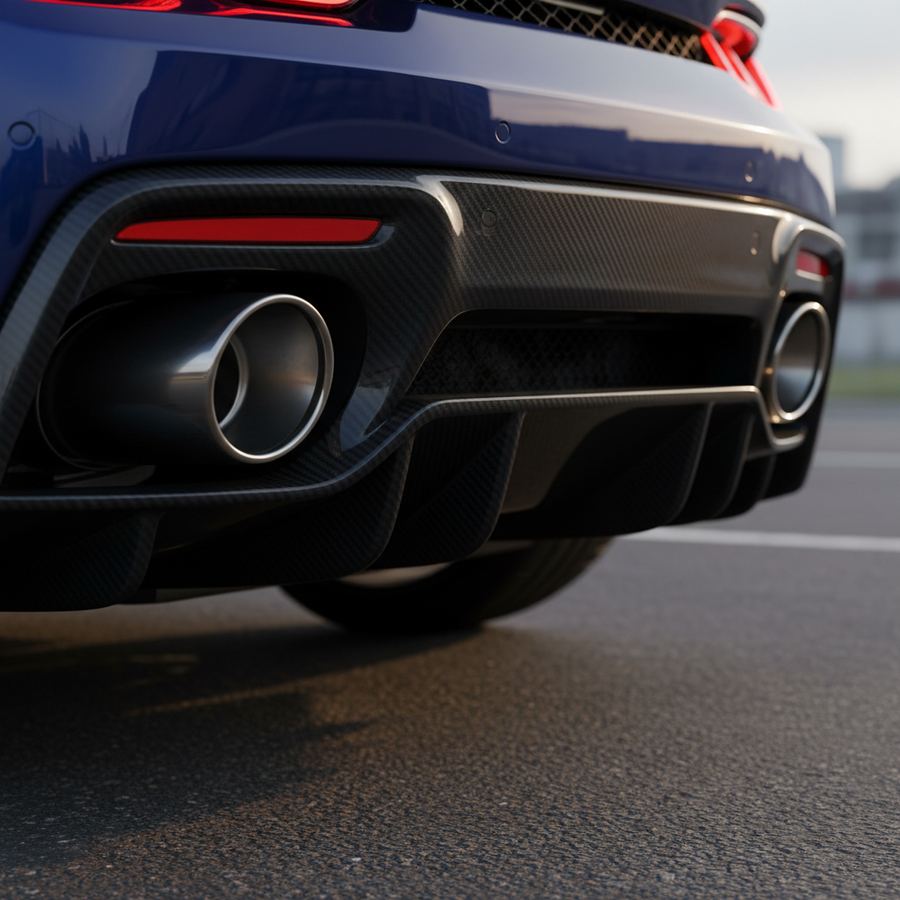
Exhaust modifications are usually the first thing people do to a car, and for good reason. A good exhaust sounds better, can free up a few horsepower, and gives the car some personality. But the exhaust market is full of garbage, and the difference between a well-designed system and a cheap eBay pipe is more than just sound quality. It affects fitment, longevity, drone levels, and whether you actually gain any power at all.
Catback vs. Axleback vs. Custom
An axleback replaces everything from the rear axle to the tips. It is the cheapest and simplest exhaust modification. On most cars, it changes the sound without affecting performance in any measurable way. The catalytic converter and midpipe are still stock, so backpressure stays roughly the same.
A catback replaces everything from the catalytic converter back. This is where you start seeing real airflow improvements. A larger-diameter midpipe with a less restrictive muffler reduces backpressure and can pick up 5-15 horsepower depending on the platform and how restrictive the factory system was. On turbocharged cars, the gains are often on the higher end because the turbo benefits from lower exhaust-side backpressure.
A custom exhaust is fabricated specifically for your car by a local shop. This makes sense when bolt-on options do not exist for your platform, when you are running a non-standard engine swap, or when you want specific resonator and muffler placement that off-the-shelf systems do not offer.
Pipe Diameter Matters
Bigger is not always better. Exhaust velocity matters as much as volume. A 3-inch catback on a stock 180-horsepower four-cylinder will actually lose low-end torque because the exhaust gas velocity drops too much. Match the pipe diameter to your power level. As a rough guideline: 2.25-2.5 inches for under 250 HP, 2.5-3 inches for 250-400 HP, and 3+ inches for 400 HP and above. Your tuner can help you decide what makes sense for your setup.
Exhaust Drone
Drone is a low-frequency resonance that happens at specific RPM ranges, usually cruising speed. It turns a nice exhaust note into a headache-inducing hum that makes highway driving miserable. Straight-through mufflers like Magnaflow-style designs are notorious for this on certain platforms.
Resonators are the fix. A well-placed resonator cancels the frequencies that cause drone without killing the exhaust note at higher RPM. This is why many quality catback systems include both a resonator and a muffler. Delete the resonator to save money and you often get exactly the drone you were trying to avoid.
If you already have a drone problem, adding a Helmholtz resonator or a small chambered resonator inline can fix it without replacing the whole system. A good exhaust shop can diagnose which frequency is the problem and size the resonator to match.
Material and Build Quality
Stainless steel (usually 304 grade) is the standard for quality exhaust systems. It resists corrosion, welds cleanly, and lasts the life of the car in most climates. Aluminized steel is cheaper but will rust through in salt-belt states within a few years. Mild steel is budget territory and rusts even faster.
Mandrel-bent tubing maintains a consistent internal diameter through bends, which keeps exhaust flow smooth. Crush-bent tubing (what cheap systems use) crimps at the bends, creating restrictions. On a performance exhaust, mandrel bending is not a luxury. It is the baseline for a system that actually does what it claims.
Fitment and Installation
A well-engineered catback should bolt up to factory hangers without modification. The tips should be centered in the bumper cutout, and nothing should contact the undercarriage or heat shield. If a system requires you to bend hangers, cut brackets, or wrestle pipes into place, it was not designed well.
On lowered cars, exhaust clearance becomes a real concern. A lowered suspension reduces the space between the exhaust and the ground, and between the exhaust and the chassis. Some catback systems that fit perfectly at stock height will scrape or contact heat shields once the car is dropped 1.5 inches. Check fitment notes from other owners at your ride height before buying.
Does Your Exhaust Need a Tune?
An axleback almost never requires a tune. A catback on a naturally aspirated car usually does not either, though you may throw a check engine light if oxygen sensor placement changes. On turbocharged cars, a catback can change backpressure enough that the ECU adjusts boost differently, and a retune is recommended to take advantage of the airflow improvement.
Downpipe replacements (the section between the turbo and the catback) absolutely require a tune. That is the most restrictive part of the exhaust system, and removing or replacing the factory catalytic converter there changes everything the ECU sees in terms of exhaust flow and exhaust gas temperature.
For the engineering side of exhaust flow dynamics, the SAE technical paper database has research on pulse tuning and backpressure effects that goes well beyond what most enthusiast forums cover.
Articles in This Section
- Catback vs. Axleback vs. CustomComparing cost, power gains, sound, and fitment across exhaust types.
- Exhaust Drone and FitmentHow to avoid drone and ensure your exhaust fits properly after lowering.