Rust Kills Builds Too
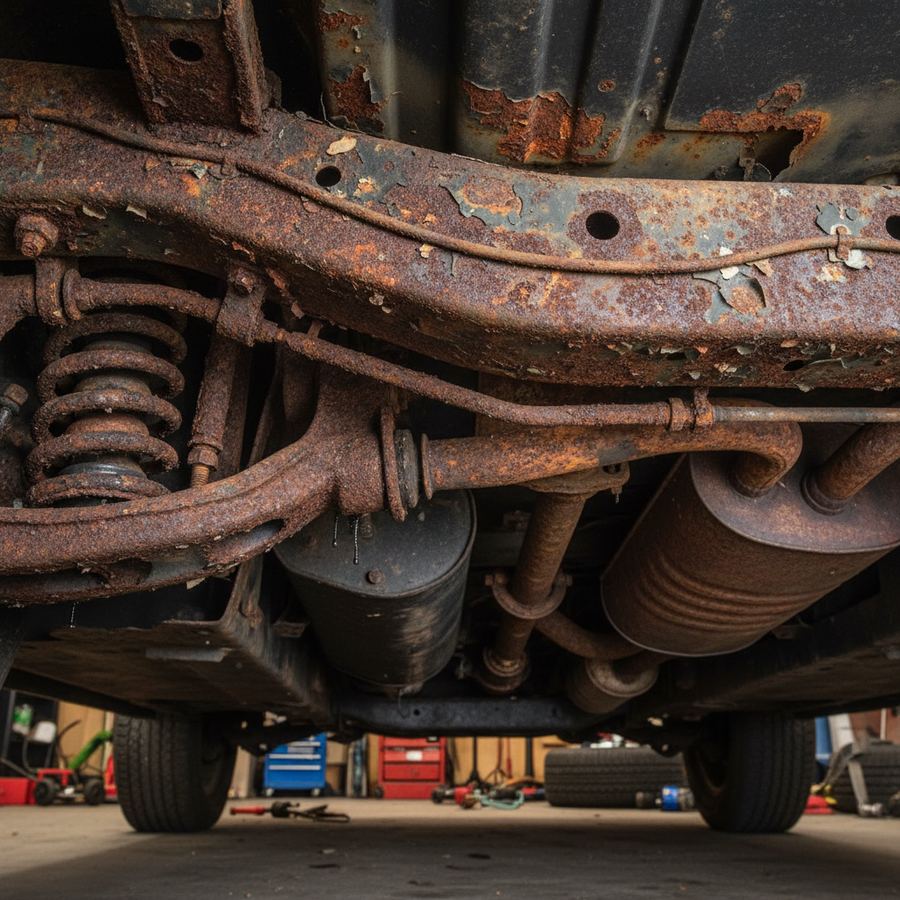
You can build 500 horsepower, run forged internals, upgrade every cooling component, and still lose the car to rust. It happens constantly. Guys pour thousands into the engine and drivetrain and completely ignore the body and undercarriage until the subframe is soft, the floor pans are perforated, and the car is worth less than the parts bolted to it.
Rust does not care about your horsepower number. It eats steel at its own pace, and modified cars are more vulnerable to it than stock ones for reasons most enthusiasts never think about.
Why Modified Cars Rust Faster
A stock car comes from the factory with splash guards, fender liners, underbody panels, and a layer of undercoating designed to protect the metal underneath. These parts exist specifically to keep road salt, water, mud, and debris away from bare steel. They are not for aerodynamics. They are corrosion protection.
Modified cars lose these protections constantly. Fender liners get removed to fit wider tires or to clear aftermarket suspension components. Splash guards get ripped off because the car is too low and they drag on everything. Underbody panels get ditched during exhaust work and never go back on. Every piece you remove exposes bare or thinly coated steel to the elements.
Lowered cars have it worse. Sitting closer to the road means more direct contact with road spray, puddles, and salt-treated surfaces. The undercarriage takes more direct hits from water, and water sits in crevices longer when the car is low enough that airflow underneath is restricted. A lowered car driving through winter road salt is being slowly eaten alive from the bottom up.
Then there is the scraping. Lowered cars scrape on driveways, speed bumps, parking lot entrances, and uneven pavement. Every scrape removes paint and coating from the lowest points of the undercarriage, creating fresh exposed metal that rusts immediately when it gets wet. The front subframe, oil pan, exhaust, and lower control arms take the worst of it.
Where Rust Hits Modified Cars First
Knowing where to look is half the battle. These are the common problem areas on modified street cars.
Wheel wells are the first place to check, especially if the fender liners are removed. Road debris and salt get thrown up by the tires and sit against the inner fender metal. Without liners, there is nothing between the road grime and the body steel. Surface rust can start within a single winter season.
The underside of the car around the subframe mounting points, floor pans, and pinch welds is next. These areas catch and hold moisture. On cars that have been lowered, the pinch welds often show scrape damage where they have contacted the ground. Once the coating is broken, water gets in and rust spreads under the remaining paint where you cannot see it until it is already structural.
Exhaust hangars and mounting points rust out on tuned cars because aftermarket exhausts often change the routing or mounting locations. The factory heat shields and hangar positions were designed to protect specific areas. When the exhaust changes, those protections may no longer cover what they were meant to.
Brake and fuel lines running along the undercarriage are another concern. On a stock car, they are routed and clipped to stay away from road debris. Aftermarket suspension work, especially coilover installs, sometimes requires rerouting these lines. If the new routing exposes them to more road spray, they rust faster. A rusted brake line is not a cosmetic issue. It is a safety failure.
Road Salt is the Accelerant
If you drive a modified car in a region that salts roads in winter, corrosion is not an if but a when. Road salt is sodium chloride, calcium chloride, or magnesium chloride depending on your area, and all of them dramatically accelerate the oxidation of steel.
Salt gets into every crevice, seam, and gap in the undercarriage. It stays there after the road dries. It absorbs moisture from the air and keeps corroding metal even when the car is parked. A single winter of daily driving on salted roads without an undercarriage wash can start visible rust on any exposed metal.
The smart move is to wash the undercarriage regularly during winter months. A pressure washer on the underside of the car every week or two removes salt buildup before it has time to do real damage. It takes ten minutes and costs nothing if you have access to a hose. It is the cheapest rust prevention there is.
Protecting the Build
Rust prevention on a modified car starts with keeping the factory protections in place wherever possible. If you had to remove a fender liner to fit a wheel, see if you can trim it and reinstall it rather than just throwing it away. If the splash guard drags at your ride height, cut it shorter instead of removing it entirely. Partial protection is better than none.
For the undercarriage, a quality undercoating or rust-proofing treatment is worth the money. There are two main approaches: rubberized undercoating and oil-based rust inhibitors. Rubberized coatings create a physical barrier but can trap moisture against the metal if they crack or peel. Oil-based products like fluid film creep into seams and displace moisture, but they need to be reapplied annually.
Annual rust protection keeps a build alive longer than another power mod. That is not an exaggeration. A $200 rust treatment once a year protects a car that has $10,000 or more in modifications. The math is obvious, but the car community still acts like corrosion is someone else's problem.
If you find rust that has already started, deal with it immediately. Surface rust can be sanded, treated with a rust converter, and repainted. Once it penetrates the metal and starts flaking, you are into cutting and welding territory, which gets expensive fast. Catching it early is the entire point.
Garage Storage and Off-Season Care
If your modified car is a seasonal vehicle, how you store it matters. A damp garage with a concrete floor and no ventilation is almost as bad as leaving the car outside. Moisture condenses on cold metal surfaces and rust progresses even when the car is sitting still.
If you have access to climate-controlled storage, use it. If not, at minimum get the car off the bare concrete with jack stands or a vapor barrier, use a dehumidifier in the space, and leave the windows cracked slightly for airflow. A breathable car cover helps if the space is dusty but do not use a non-breathable cover in a damp environment. It traps moisture against the body and makes things worse.
Before storage, wash the entire car including the undercarriage, wax the paint, and apply a fresh coat of rust inhibitor underneath. A clean, treated car going into dry storage will come out in spring the same way it went in. A dirty, salt-covered car going into a damp garage will come out with new rust.
Treat It Like Part of the Build
The performance car community talks endlessly about supporting mods for power. Fuel systems, intercoolers, clutch upgrades. All the stuff you need to make the power number stick. Rust prevention is a supporting mod for the car itself. It supports the investment you have already made in the platform.
Nobody wants to talk about undercoating and wheel well liners at a car meet. It is not exciting. But the guys who are still driving their builds ten years from now are the ones who treated the body with the same attention they gave the engine. Power gets the attention. Maintenance and rust prevention keep the car on the road.
Check underneath your car this weekend. If you see bare metal, scrape marks, or orange patches forming on the subframe, take care of it now. It only gets worse from here, and the fix only gets more expensive the longer you wait.